

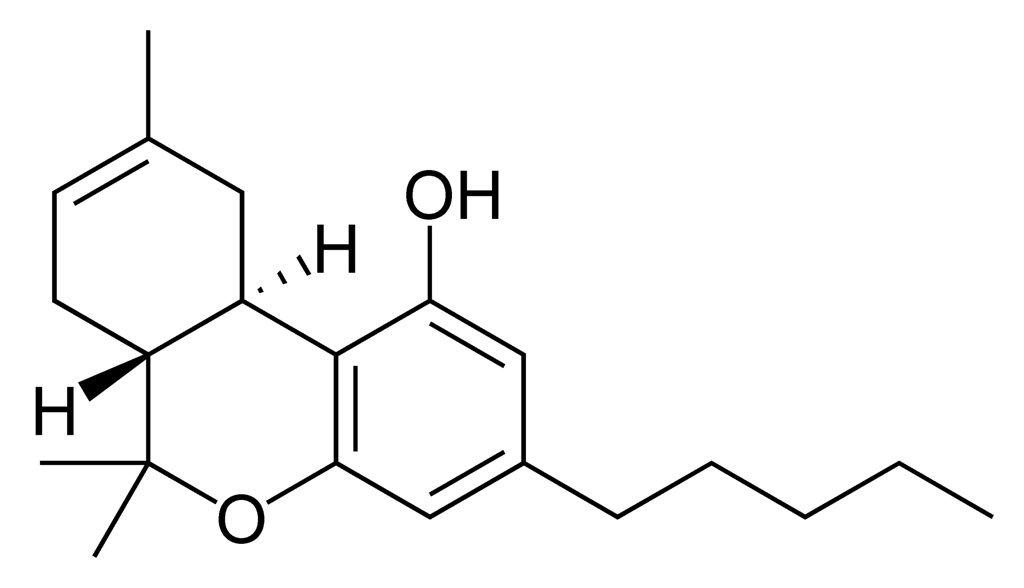
What Clinicians Need to Know: Delta-8 tetrahydrocannabinol (THC)
Delta-8 tetrahydrocannabinol (Delta-8 THC) is a cannabinoid gaining traction as a legal alternative to Delta-9 THC, the primary compound in cannabis. While both share structural similarities, Delta-8 is often described as a “milder” version of Delta-9. However, clinicians should be aware that this perceived safety may be misleading. Delta-8 has distinct biological effects, manufacturing-related hazards, and a growing record of adverse events, many of which remain under-recognized in clinical practice.
Despite the risks, some patients turn to Delta-8 for symptomatic relief, including pain, anxiety, and nausea.
Pharmacologically, Delta-8 THC is structurally similar to Delta-9 THC, differing only in the position of a double bond on the carbon chain. This small difference results in slightly weaker affinity for CB1 receptors in the brain, leading to milder psychoactive effects (Kruger & Kruger, 2021). Users often describe Delta-8 as producing a less anxious and more clear-headed high compared to Delta-9. However, due to its interaction with the endocannabinoid system, Delta-8 likely still carries risks of cognitive impairment, dizziness, dry mouth, and increased heart rate. Importantly, CB1 receptor activation also affects cardiovascular, gastrointestinal, and immunological functions. As such, Delta-8 can increase heart rate and blood pressure, suppress nausea, and modulate immune responses—effects that carry risks, especially in patients with comorbid conditions.

One of the major concerns associated with Delta-8 use is the method of its production. Unlike naturally abundant Delta-9, Delta-8 occurs in trace amounts in cannabis and is typically synthesized from cannabidiol (CBD) derived from hemp. This chemical conversion often involves the use of acids, solvents, and catalysts, which may remain as residues in the final product if not properly purified. Further, a range on isomers will likely be created by these processes, the safety of which is completely unknown.
Analytical studies have identified heavy metals, residual solvents, and unknown isomers in many commercial Delta-8 products (Hudalla et al., 2021). These contaminants pose toxicological risks, particularly to vulnerable populations such as children, pregnant individuals, and immunocompromised patients.
This synthetic conversion has raised regulatory and safety concerns. Since the 2018 Farm Bill legalized hemp-derived products containing less than 0.3% Delta-9 THC, Delta-8 has existed in a legal gray area. As of 2024, several U.S. states have banned or restricted its sale due to safety concerns and lack of regulatory oversight (U.S. Food and Drug Administration \[FDA], 2022).
Clinical data on Delta-8’s safety profile is limited, but emerging evidence points to significant adverse effects. The U.S. Food and Drug Administration (FDA) has reported an increase in Delta-8-related incidents, including hallucinations, vomiting, tremors, anxiety, and loss of consciousness (FDA, 2022). The biological mechanisms behind these reactions are likely due to excessive CB1 receptor activation, unregulated dosing, and unknown contaminants. Pediatric exposures are especially concerning, with multiple cases of accidental ingestion leading to hospitalization.
In addition, Delta-8 THC is often marketed in forms that appeal to youth—such as gummies, candies, and vape cartridges—despite being unapproved for medical use. The lack of standardized dosing and misleading labeling increase the risk of overdose and toxic exposure.

In clinical practice, providers should approach Delta-8 with the same caution as other cannabinoids. Comprehensive patient histories should include cannabis use, particularly involving unregulated products like Delta-8. Providers should educate patients about its potential risks, especially in relation to cardiovascular, cognitive, and developmental health.
While Delta-8 THC may have unstudied therapeutic potential, it likely does not present an improvement over well-studied Delta-9 THC. It presents significant safety concerns due to its pharmacological activity, synthetic production methods, and lack of regulation. Clinicians must remain vigilant, informed, and proactive in addressing its use with patients.
References
- Food and Drug Administration. (2022). *5 things to know about Delta-8 tetrahydrocannabinol—Delta-8 THC*. [https://www.fda.gov/consumers/consumer-updates/5-things-know-about-delta-8-tetrahydrocannabinol-delta-8-thc](https://www.fda.gov/consumers/consumer-updates/5-things-know-about-delta-8-tetrahydrocannabinol-delta-8-thc)
- Hudalla, C., Akinyemi, I., & Lee, S. (2021). Delta-8 THC: Analytical challenges and health concerns. *Journal of Cannabis Research, 3*(1), 36. [https://doi.org/10.1186/s42238-021-00073-2](https://doi.org/10.1186/s42238-021-00073-2)
- Kruger, J. S., & Kruger, D. J. (2021). Delta-8-THC: Delta-9-THC’s nicer younger sibling? *Journal of Cannabis Research, 3*, 36. [https://doi.org/10.1186/s42238-021-00072-3](https://doi.org/10.1186/s42238-021-00072-3)