

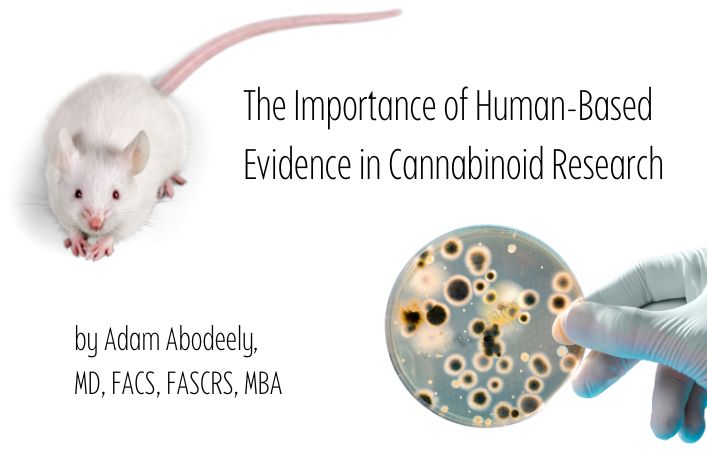
The Importance of Human-Based Evidence in Cannabinoid Research
In the realm of medical research, particularly within the context of cannabinoids, the reliance on human-based evidence over animal or cell studies holds paramount importance.
While preclinical data serves as a foundation for future exploration, it frequently gives rise to misconceptions, unwarranted enthusiasm, or erroneous communication when extrapolated to human outcomes. Significantly placing undue faith in preclinical data, whether derived from animal or cellular studies, carries the potential for adverse consequences for patients and has the capacity to result in harm.
The Association of Cannabinoid Specialists (ACS) upholds a steadfast policy favoring human-based research, citing numerous reasons why this approach is crucial not only for their organization but also for the broader scientific community.
Limitations of Animal and Cell Studies
Animal and cell studies have been foundational in advancing scientific understanding, yet they come with inherent limitations when extrapolating findings to human subjects.
One key challenge stems from the biological differences and developmental spans between species. While animals may metabolize compounds differently or exhibit varied responses to stimuli, human bodies possess unique complexities that cannot be fully replicated in laboratory settings. This discrepancy raises concerns about the translatability of results from animal models to human populations.

Furthermore, the controlled environment of cell studies often fails to capture the intricate interplay of biological systems and organ functions present in humans. Cell cultures lack the systemic interactions and dynamic responses found within living organisms, leading to an oversimplification of complex physiological processes. As a result, conclusions drawn from isolated cell experiments may not accurately reflect the holistic effects observed in human trials.
Consider these facts:
** Approximately 6% of animal studies translate to a human response
** Less than 1/3 of highly cited animal research findings translate at the level of human trials
Advantages of Human-Based Studies
In contrast, human-based studies offer a direct and comprehensive understanding of how cannabinoids interact within the human body. By reviewing research exclusively on human subjects, the ACS prioritizes the relevance and applicability of their findings to real-world scenarios. This approach ensures that data derived from studies align closely with the responses and outcomes experienced by individuals using cannabinoid-based products.
Human-based evidence provides a more nuanced perspective on the efficacy, safety, and tolerability of cannabinoids in diverse populations. By accounting for individual variations in genetics, lifestyle factors, and underlying health conditions, researchers can tailor interventions to specific patient needs with greater precision. This personalized approach enhances the development of cannabinoid therapies tailored to optimize patient outcomes and minimize adverse effects.
Current State of Human-Based Cannabinoid Research
The field of human-based cannabinoid research has made significant strides in elucidating the therapeutic potential of cannabinoids across various health conditions. Studies focusing on pain management, sleep regulation, anti-inflammatory properties, and mental health have demonstrated promising results in human trials. These findings underscore the clinical relevance of cannabinoids in addressing unmet medical needs and improving patient well-being.

Nevertheless, ongoing research efforts are needed to expand our knowledge of cannabinoids' mechanisms of action, optimal dosing strategies, long-term effects, and potential interactions with conventional medications.
Areas often discussed with regard to cannabinoid benefits including neuroprotection, anti-neoplastic action, and the efficacy of minor cannabinoids/terpenoids, while showing promise in the pre-clinical domain, have yet to be extensively studied in human beings.
Collaborative initiatives involving multidisciplinary teams, patient advocacy groups, and regulatory bodies will be instrumental in advancing the field of human-based cannabinoid research and translating scientific discoveries into tangible benefits for individuals worldwide.
The ACS's commitment to utilizing human-based evidence reflects a dedication to scientific rigor, ethical conduct, and patient-centered care. By championing research methodologies that prioritize human subjects, the ACS paves the way for transformative advancements in cannabinoid therapy and sets a gold standard for evidence-based practice in the medical community.
For further reading and scientific references, please refer to the following sources:
- Van der Worp HB, Howells DW, Sena ES, Porritt MJ, Rewell S, O’Collins V, et al. Can animal models of disease reliably inform human studies? PLoS Med. 2010;7: e1000245.
- Hackam DG, Redelmeier DA. Translation of research evidence from animals to humans. JAMA. 2006;296: 1731–1732.
- Mak IW, Evaniew N, Ghert M. Lost in translation: animal models and clinical trials in cancer treatment. Am J Transl Res. 2014;6(2):114–118.
- Cekanova, Maria, and Kusum Rathore. "Animal models and therapeutic molecular targets of cancer: utility and limitations." Drug design, development and therapy(2014): 1911-1922.