
Inside the Microbiome-Endocannabinoid Axis
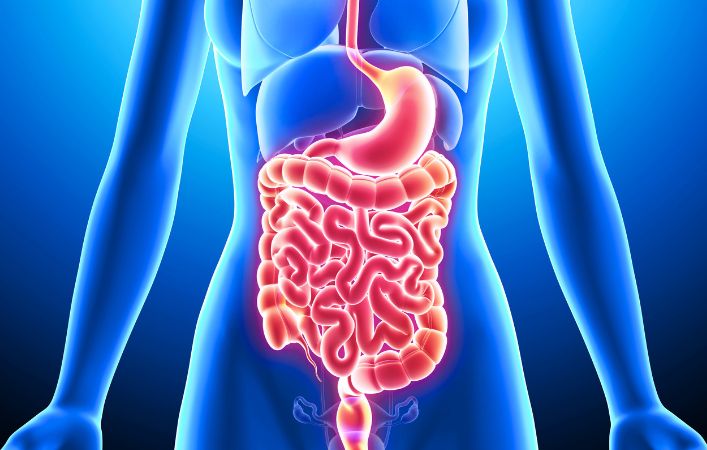
The gut is home to a complex communication network that integrates neural, immune, and microbial inputs to maintain gastrointestinal health.
Two major regulators of this environment, the endocannabinoid system and the gut microbiome, work together to influence essential physiological processes, including digestion, immunity, and barrier integrity.
Recent evidence suggests a bidirectional relationship between these systems, indicating that disturbances in either can lead to dysfunction across the gut-brain axis.6 Disruptions in ECS tone or microbial composition have been associated with inflammatory bowel disease, irritable bowel syndrome, gastroparesis, and even colorectal cancer.
Since these conditions share overlapping features, understanding the microbiome-ECS axis can offer new insights into how cannabinoids and microbial activity shape gastrointestinal health.
Overview of the Endocannabinoid System
The ECS consists of endogenous cannabinoids, enzymes, cannabinoid receptors, and non-cannabinoid receptors that regulate physiological functions throughout the body. Within the GI tract, endocannabinoids act to modulate neuronal excitability, inflammatory signaling, and smooth muscle contractility.4
CB1 receptors primarily regulate motility and visceral pain, while CB2 receptors help regulate cytokine release and inflammation.6
Disturbances in endocannabinoid signaling, whether from genetic variation, microbial imbalance, or chronic inflammation, can weaken the GI system and contribute to disease expression. Such dysregulation has been linked to conditions, including irritable bowel syndrome and inflammatory bowel disease, where altered motility, hypersensitivity, and immune imbalance are common features.4
Understanding the Gut Microbiome
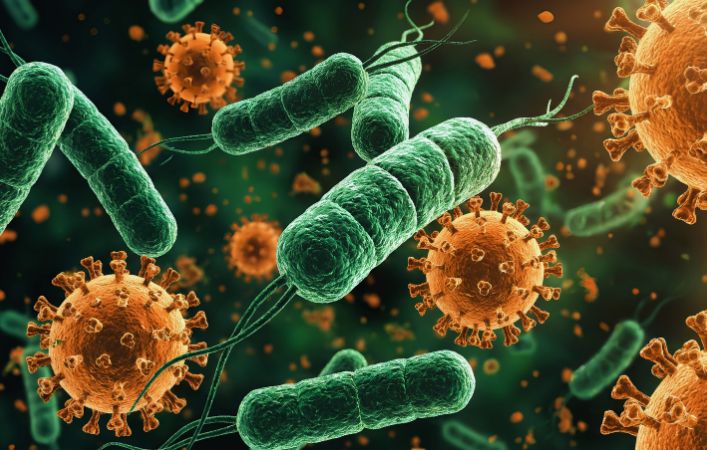
The gut microbiome is a dynamic ecosystem of bacteria, fungi, viruses, and archaea that interact with host cells to maintain gastrointestinal function. These microbes play essential roles in nutrient absorption, energy regulation, immune development, and the synthesis of bioactive metabolites.2
A healthy microbiome strengthens epithelial barrier integrity and regulates immune tone by shaping immune responses.2 In contrast, disturbances in microbial composition can increase intestinal permeability, activate inflammatory pathways, and impair motility.2 Dysbiosis has been associated with a wide range of GI disorders, and the microbiome’s ability to regulate ECS signaling adds an additional layer of complexity.
The Microbiome–ECS Connection
The ECS acts as a bridge between gut microbes and host physiology. Microbes regulate ECS receptors, endocannabinoid levels, and epithelial barrier function, while ECS signaling modulates immunity, motility, metabolic tone, and gut permeability.6
Gut microbes produce metabolites, such as short-chain fatty acids, indoles, and secondary bile acids, that can enhance or suppress enzymes involved in endocannabinoid synthesis and degradation.6 Changes in microbial composition have also been shown to alter CB1 and CB2 receptor activity, affecting pain perception and inflammation along the gut-brain axis.6
ECS activation influences microbiome structure by regulating physiological functions in the GI tract. This creates a feedback loop in which both systems continuously shape one another. This relationship suggests that disruptions in microbial communities can cause ECS dysfunction and vice versa, ultimately contributing to gastrointestinal and metabolic disorders.
Clinical Significance
Understanding this interconnected axis has significant implications for patient care because disruptions in either the microbiome or the ECS can manifest as overlapping GI symptoms.
In conditions such as IBD, cannabinoids may reduce abdominal pain, diarrhea, and inflammatory discomfort, although current evidence suggests that use of ordinary botanical cannabis for symptom relief does not correlate with mucosal healing,3 though specific cannabinoids like THC-A may, in fact, modify the disease process.5 In IBS, dysbiosis and ECS imbalance contribute to visceral hypersensitivity and irregular motility patterns, which illustrates how microbiome-ECS interactions influence functional bowel symptoms.3

A clinical study reported that disorders such as gastroparesis showed improvement in nausea, vomiting, and gastric dysrhythmia, with dronabinol and other cannabinoids.1 Recent clinical research highlights pharmacogenetic and functional variations in ECS components that occur in multiple GI diseases, including IBS, IBD, and celiac disease.6 Many of these disorders exhibit changes in AEA and 2-AG levels, upregulation of degradative enzymes, and shifts in receptor expression, ultimately leading to visceral hypersensitivity and inflammation.6
These findings support the concept that disease expression may arise not only from inflammatory injury but also from predisposing ECS dysfunction. Individual responses to cannabinoids can vary according to baseline ECS tone, gut microbial differences, and genetic factors. Since the microbiome can reshape ECS tone and cannabinoids can reshape the microbiome, future therapeutic strategies may combine dietary interventions, probiotics, and cannabinoid-based treatments to restore homeostasis.
Conclusion
The microbiome–endocannabinoid axis represents a regulatory system that shapes gut physiology and immunity.
Research shows that ECS dysfunction is present across multiple GI diseases and that cannabinoids can meaningfully reduce symptoms in conditions such as IBS, IBD, and gastroparesis. The microbiome actively influences ECS signaling, suggesting that future therapies may combine dietary modulation, microbial interventions, and cannabinoid-based treatments to restore GI homeostasis.
As research advances, the personalized use of cannabinoids, guided by microbiome composition, ECS biomarkers, and genetic factors, may offer more precise and effective strategies for improving gut health and restoring balance within the gastrointestinal system.
References
- Barbash, B., Mehta, D., Siddiqui, M. T., Chawla, L., & Dworkin, B. (2019). Impact of Cannabinoids on Symptoms of Refractory Gastroparesis: A Single-center Experience. Cureus, 11(12), e6430. https://doi.org/10.7759/cureus.6430
- de Vos, W. M., Tilg, H., Van Hul, M., & Cani, P. D. (2022). Gut microbiome and health: mechanistic insights. Gut, 71(5), 1020–1032. https://doi.org/10.1136/gutjnl-2021-326789
- Jansma, J., Brinkman, F., van Hemert, S., & El Aidy, S. (2021). Targeting the endocannabinoid system with microbial interventions to improve gut integrity. Progress in neuro-psychopharmacology & biological psychiatry, 106, 110169. https://doi.org/10.1016/j.pnpbp.2020.110169
- 4. Lee, Y., Jo, J., Chung, H. Y., Pothoulakis, C., & Im, E. (2016). Endocannabinoids in the gastrointestinal tract. American journal of physiology. Gastrointestinal and liver physiology, 311(4), G655–G666. https://doi.org/10.1152/ajpgi.00294.2015
- Nallathambi, R., Mazuz, M., Ion, A., Selvaraj, G., Weininger, S., Fridlender, M., Nasser, A., Sagee, O., Kumari, P., Nemichenizer, D., Mendelovitz, M., Firstein, N., Hanin, O., Konikoff, F., Kapulnik, Y., Naftali, T., & Koltai, H. (2017). Anti-Inflammatory Activity in Colon Models Is Derived from Δ9-Tetrahydrocannabinolic Acid That Interacts with Additional Compounds in Cannabis Extracts. Cannabis and Cannabinoid Research, 2(1), 167–182. https://doi.org/10.1089/can.2017.0027
- Srivastava, R. K., Lutz, B., & Ruiz de Azua, I. (2022). The Microbiome and Gut Endocannabinoid System in the Regulation of Stress Responses and Metabolism. Frontiers in cellular neuroscience, 16, 867267. https://doi.org/10.3389/fncel.2022.867267