
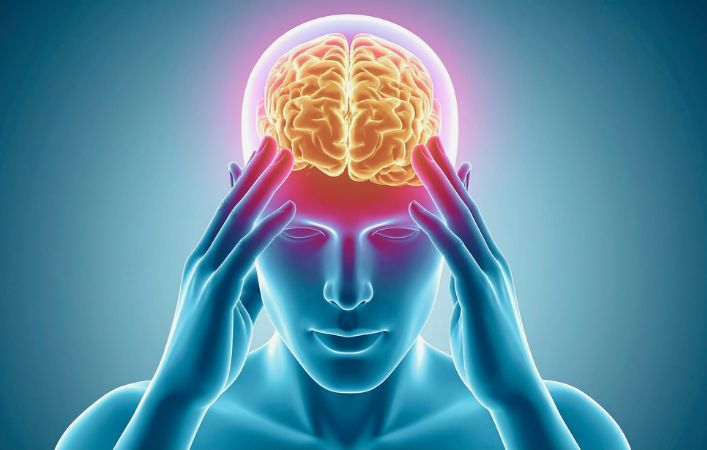
Cannabinoids and Migraines: Emerging Evidence and Clinical Implications
Migraines and chronic headaches are more than just episodes of pain, they are complex neurological disorders that can significantly disrupt quality of life, productivity, and mental health.
Therapeutic Gap
Although conventional treatments such as triptans, nonsteroidal anti-inflammatory drugs (NSAIDs), and preventive medications are widely effective, some patients continue to experience inadequate relief or intolerable side effects.
This therapeutic gap has led to growing interest medical cannabis and cannabinoid-based therapies for migraine treatment. Emerging research suggests that the Endocannabinoid System (ECS), which regulates pain, inflammation, and neurotransmitter signaling, plays a critical role in migraine pathophysiology.
Some researchers have even proposed the concept of “clinical endocannabinoid deficiency,” in which reduced endocannabinoid levels may contribute to migraine susceptibility, further supporting the rationale for cannabis-based interventions (Poudel et al., 2021).
Cannabis Studies for Migraines and Headaches
Recent studies provide promising evidence for the short-term effectiveness of cannabis in reducing migraine and headache severity.
In a large observational study, Cuttler et al. (2020) found that inhaled cannabis reduced headache severity by approximately 47% and migraine severity by nearly 50% in real-time user reports.
Similarly, Stith et al. (2020) demonstrated that cannabis flower significantly alleviated migraine symptoms, with higher tetrahydrocannabinol (THC) concentrations often associated with greater relief.
These findings suggest that cannabis may act rapidly to reduce symptoms, particularly when inhaled, though individual responses vary, and with ad lib use, tolerance may develop over time.
Cannabinoids and Therapeutic Effects
Cannabis contains numerous bioactive compounds, but tetrahydrocannabinol (THC) and cannabidiol (CBD) are the most studied in the context of migraine treatment. THC is the best researched overall and has been shown to produce strong analgesic and anti-nausea effects, making it particularly relevant for acute migraine relief. THC is also well known for its side effect of intoxication.
In contrast, CBD is non-psychoactive and is known in pre-clinical studies for its anti-inflammatory and neuroprotective properties, though evidence for its direct effectiveness in treating migraines remains limited (Luu et al., 2025).
Notably, preclinical research suggests that combining THC and CBD may produce enhanced therapeutic effects. For example, Zorrilla et al. (2025) demonstrated that the combined administration of these cannabinoids significantly reduced migraine-like symptoms in animal models.
How Cannabis Works for Migraines and Headaches
The potential benefits of cannabis in migraine management are supported by its interaction with key biological pathways involved in pain and inflammation. Cannabinoids activate CB1 receptors in the central nervous system, which helps reduce pain signaling, and CB2 receptors in peripheral tissues, which modulate inflammation. CBD is known to allosterically modulate the CB receptors’ response to THC binding. Additionally, cannabinoids may influence serotonin pathways and inhibit the release of calcitonin gene-related peptide (CGRP), a neuropeptide strongly implicated in migraine pathogenesis (Chandwani et al., 2023). These mechanisms are particularly noteworthy because they overlap with the targets of many modern migraine therapies, suggesting that cannabis may offer a complementary or alternative approach.
The Need for Clinical Guidance
Despite these promising findings, the long-term use of cannabis for migraine treatment presents important considerations. Ad lib use (wherein dosing is decided by the user, not a clinician) may lead to tolerance, requiring higher doses to achieve the same effect, dependence, and even a use-disorder.
There is also some evidence of risk of medication overuse headache (MOH), a condition associated with frequent use of pain-relieving substances (Cuttler et al., 2020).
Additionally, excessive THC dose may produce cognitive or psychological side effects.
Kuruvilla (2025) emphasizes that cannabinoids can be both beneficial and harmful depending on factors such as dosage, formulation, and individual patient characteristics, underscoring the need for careful clinical guidance.
Clinical Perspective of Cannabis for Migraines and Headaches
From a clinical perspective, medical cannabis is generally considered a potential option for patients with treatment-resistant migraines or those who cannot tolerate standard therapies (Duarte et al., 2021).
However, it is not currently recommended as a first-line treatment due to the limited number of randomized controlled trials and the lack of standardized dosing guidelines.
As research continues to evolve, there is a growing need for more rigorous clinical studies, standardized formulations, and personalized treatment strategies that might benefit from pharmacogenomics and ECS profiling (Poudel et al., 2021; Chandwani et al., 2023).
Cannabis represents a promising but widely deployed option for migraine and headache management. Current evidence suggests that it may be effective for short-term symptom relief, and clinical experience demonstrates safety in longer-term use under close clinician guidance. Dosing of CBD remains unclear, but the approach to THC management is clearer and guidelines for its use in migraine treatment are available to interested clinicians via ACS courses.
References:
- Chandwani, B., Bradley, B. A., Pace, A., Buse, D. C., Singh, R., & Kuruvilla, D. (2023). The exploration of cannabis and cannabinoid therapies for migraine. Current Pain and Headache Reports, 27(9), 339–350. [https://doi.org/10.1007/s11916-023-01144-z](https://doi.org/10.1007/s11916-023-01144-z)
- Cuttler, C., Spradlin, A., Cleveland, M. J., & Craft, R. M. (2020). Short- and long-term effects of cannabis on headache and migraine. The Journal of Pain, 21(5–6), 722–730. [https://doi.org/10.1016/j.jpain.2019.11.001](https://doi.org/10.1016/j.jpain.2019.11.001)
- Duarte, R. A., Dahmer, S., Sanguinetti, S. Y., Forde, G., Duarte, D. P., & Kobak, L. F. (2021). Medical cannabis for headache pain: A primer for clinicians. Current Pain and Headache Reports, 25 (10), 64. [https://doi.org/10.1007/s11916-021-00974-z](https://doi.org/10.1007/s11916-021-00974-z)
- Kuruvilla, D. E. (2025). Cannabinoids in headache: Helpful or harmful? Current Opinion in Neurology, 38 (3), 277–280. [https://doi.org/10.1097/WCO.0000000000001364](https://doi.org/10.1097/WCO.0000000000001364)
- Luu, B., Goldin, P., & Rice, E. (2025). Should CBD be used for migraine? JAAPA, 38 (8), 32–37. [https://doi.org/10.1097/01.JAA.0000000000000234](https://doi.org/10.1097/01.JAA.0000000000000234)
- Poudel, S., Quinonez, J., Choudhari, J., Au, Z. T., Paesani, S., Thiess, A. K., Ruxmohan, S., Hosameddin, M., Ferrer, G. F., & Michel, J. (2021). Medical cannabis, headaches, and migraines: A review of the current literature. Cureus, 13 (8), e17407. [https://doi.org/10.7759/cureus.17407](https://doi.org/10.7759/cureus.17407)
- Stith, S. S., Diviant, J. P., Brockelman, F., Keeling, K., Hall, B., Lucern, S., & Vigil, J. M. (2020). Alleviative effects of cannabis flower on migraine and headache. Journal of Integrative Medicine, 18 (5), 416–424. [https://doi.org/10.1016/j.joim.2020.07.004](https://doi.org/10.1016/j.joim.2020.07.004)
- Zorrilla, E., Krivoshein, G., Kuburas, A., Schenke, M., Piña, C. L., van Heiningen, S. H., Waite, J. S., Dehghani, A., Castonguay, W. C., Flinn, H. C., van den Maagdenberg, A. M. J. M., Russo, A. F., Tolner, E. A., & Wattiez, A. S. (2025). Combined effects of cannabidiol and Δ9-tetrahydrocannabinol alleviate migraine-like symptoms in mice. Cephalalgia, 45 (2). [https://doi.org/10.1177/03331024251314487](https://doi.org/10.1177/03331024251314487)