

Additional Ingredients in Cannabis Products
Cannabis-infused products are increasingly incorporating a diverse range of additional ingredients such as botanicals (e.g., corydalis), hormones (e.g., melatonin), minor cannabinoids, mushrooms, and even essential oils in pursuit of new branding angles and supposed therapeutic effects.
Given that most of these additional ingredients are not proven for either benefit or safety, their availability in consumer markets is also accompanied by important yet often ignored risks related to safety, quality, efficacy, and transparency. (1)
Expansion of Cannabis Product Ingredients
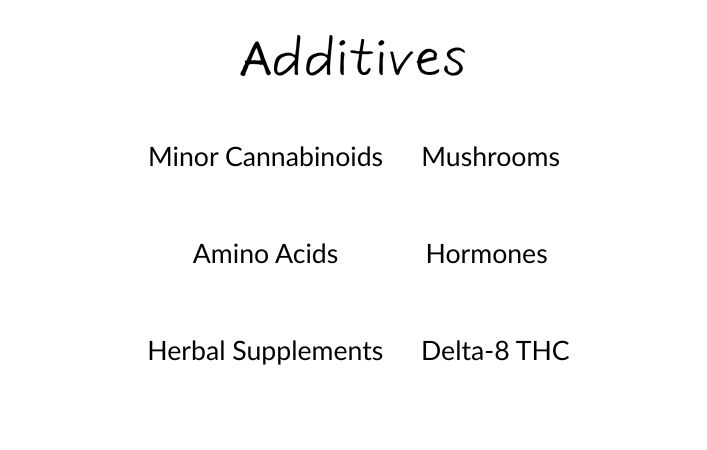
Manufacturers of cannabis edibles, tinctures, topicals, and even vaporizer products have moved beyond THC and CBD, adding compounds like CBG, CBN, delta-8 THC, and newly-isolated minor cannabinoids.
Furthermore, consumer demand for holistic remedies has stimulated the inclusion of herbal supplements (e.g., corydalis), mushrooms (e.g., reishi, lion’s mane), amino acids (e.g., GABA), and hormones (e.g., melatonin) in combination with cannabinoids.
These multi-ingredient products are particularly marketed to address issues such as sleep, anxiety, and pain, reflecting trends seen in general wellness industries. (2)
Availability of Combination Products
Newly formulated cannabis products featuring additional ingredients are widely available in dispensaries, online stores, and mainstream marketplaces, sometimes even in regions where regulated cannabis is limited.
Gummies, capsules, beverages, tinctures, and vapes now frequently carry labels advertising not just THC or CBD, but also sleep aids like melatonin, herbal sedatives such as corydalis or passionflower, and “functional mushrooms”. These can be purchased in both regulated (state-licensed) and unregulated (hemp-derived or gray-market) channels, raising additional questions about reliable oversight. (3)
Risks Associated with Additional Herbal/Botanical Ingredients
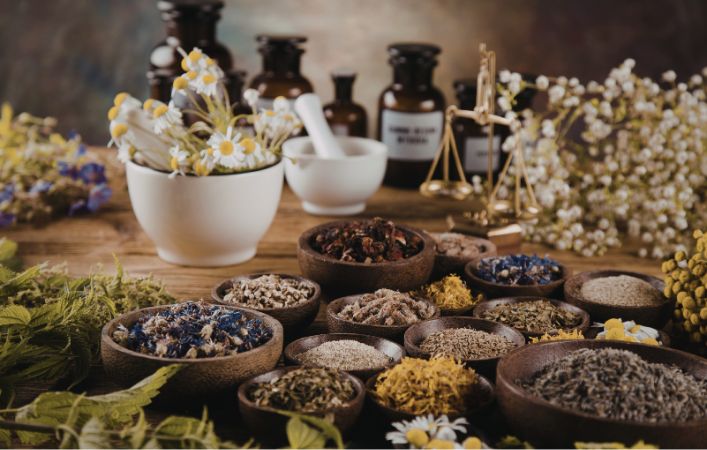
The inclusion of herbs like corydalis or mushrooms such as reishi introduces not just new potential therapeutic effects but real toxicological risks. Corydalis, for instance, is known in traditional medicine but can be hepatotoxic (damaging to the liver) and has been linked to cases of potentially fatal liver failure. Some species and extracts are also suspected neurotoxins, and their interactions with cannabinoids have not been rigorously studied in humans.
Although products may highlight the anecdotal benefits of such botanicals, scientific proof of their safety and efficacy in combination with cannabinoids is lacking, and sensitive individuals may experience unpredictable or severe adverse effects. (2)
Concerns Regarding Hormonal and Supplement Additives
Melatonin, while generally recognized as safe for short-term use, can cause vivid and disturbing dreams in up to 20% of users, and some find it completely ineffective.
When combined with psychoactive cannabinoids, both the sleep-inducing and hallucinogenic effects of such products may be amplified, leading to difficulty identifying which ingredient is responsible for any negative reaction.
Unlike prescription combinations, these products are not subject to robust safety pharmacology or interaction studies. (6)
Risks from Minor and Synthetic Cannabinoids
The growing proliferation of products containing “minor” cannabinoids (like CBG, CBN, delta-8 THC) or semi-synthetic compounds, created via chemical conversion rather than natural extraction, (like or delta-10 THC, THC-O, HHC, and others) bring another level of risk. These chemicals lack meaningful human safety data.
Major risks include: (4)
- Uncharacterized pharmacologic effects (i.e., stimulating vs. sedating, pro-psychotic vs. anxiolytic)
- Unknown long-term effects (i.e., causing cancer or birth defects)
- Impurities or unreacted precursor chemicals left from synthesis
- Greater variability and inaccuracy in labeling and dosing (5)
- Risk of drug interactions, toxicity, and unknown long-term health consequences (10)
Some minor and synthetic cannabinoids have already been associated with events like severe nausea, persistent vomiting, neurological symptoms, and even poisonings. (3)
Additive Risks: Purity, Labeling, and Contamination

Every additional ingredient in a cannabis product creates another point of vulnerability for poor quality, contamination, or adulteration. Common issues include:
- Heavy metals, pesticides, or residual solvents from botanicals and essential oils (11)
- Unknown allergens or irritants (12)
- Inconsistent and inaccurate labeling—both of cannabinoid content and added ingredients (4)
- Inadequate childproofing and accidental ingestion risks, especially with brightly colored edibles (4)
Most unregulated or internet-sold products are not subject to mandatory batch testing, meaning consumers may be unaware of hazards present in the final product. (9)
Clinical and Regulatory Considerations
Because many combination products are sold as dietary supplements or via loopholes in hemp regulations, they lack the clinical trials and regulatory scrutiny applied to pharmaceuticals. This means:
- No established safety margin or effective dose for complex ingredient blends (9)
- No scientific evidence supporting many health claims on labels (13)
- Increased risk of consumers delaying or avoiding evidence-based care by substituting unproven remedies
Key Recommendations
- Avoid products containing multiple active ingredients.
- Avoid products that make broad claims about unstudied ingredient synergies or effects. (3)
- Seek cannabis products from regulated dispensaries that provide third-party testing of all ingredients, not just cannabinoid content. (1)
- Consult healthcare professionals before beginning any cannabis product especially those that include additional herbal or supplement ingredients (14)
While the availability of cannabis products combined with lesser-known cannabinoids, botanicals, and supplements is rapidly expanding, these innovations carry significant risks related to toxicity, unpredictability, contamination, and regulatory gaps. Since most of these additional ingredients have not been studied in humans, it is best to avoid them until further study confirms their efficacy and safety. (1)
References:
- https://www.agricorlabs.com/non-cannabis-ingredients-in-cannabis-products-the-scoop-with-alec-dixon/
- https://inhalemd.com/blog/growing-concern-additives-in-cannabis-medicines/
- https://inhalemd.com/?p=7556
- https://health.mo.gov/emergencies/ert/alertsadvisories/pdf/advisory041824.pdf
- https://pubmed.ncbi.nlm.nih.gov/39478329/
- https://weedmaps.com/news/2021/11/ask-a-budtender-what-are-the-best-weed-products-for-sleep/
- https://www.plantpeople.co/products/wondersleep-mushroom-gummies
- https://grandjunctiongreenery.com/2021/12/14/marijuana-edibles-for-sleep/
- https://www.narconon.org/blog/new-cannabinoids-on-the-market-and-their-dangerous-effects.html
- https://archive.cdc.gov/www_cdc_gov/nceh/hsb/envepi/outbreaks/sc/About.html
- https://adai.uw.edu/wordpress/wp-content/uploads/2020/11/Cannabis-Concentration-and-Health-Risks-2020.pdf
- https://www.quebec.ca/en/health/advice-and-prevention/alcohol-drugs-gambling/recognizing-drugs-and-their-effects/cannabis/description-effects-risks-cannabis/risks-associated-methods-cannabis-use
- https://www.fda.gov/consumers/consumer-updates/what-you-need-know-and-what-were-working-find-out-about-products-containing-cannabis-or-cannabis
- https://bedrocan.com/healthcare-professionals/cannabis-side-effects-and-risks/
- https://inhalemd.com/blog/cannabis-products-with-multiple-ingredients-what-you-should-know-part-2/
- https://inhalemd.com/blog/cannabis-products-with-multiple-ingredients-what-you-should-know-part-1/
- https://pmc.ncbi.nlm.nih.gov/articles/PMC8251682/
- https://novascotia.ca/cannabis/edibles-extracts-and-topicals/
- https://ma.temescalwellness.com/education/looking-for-the-latest-trend-in-edibles
- https://pmc.ncbi.nlm.nih.gov/articles/PMC5999798/